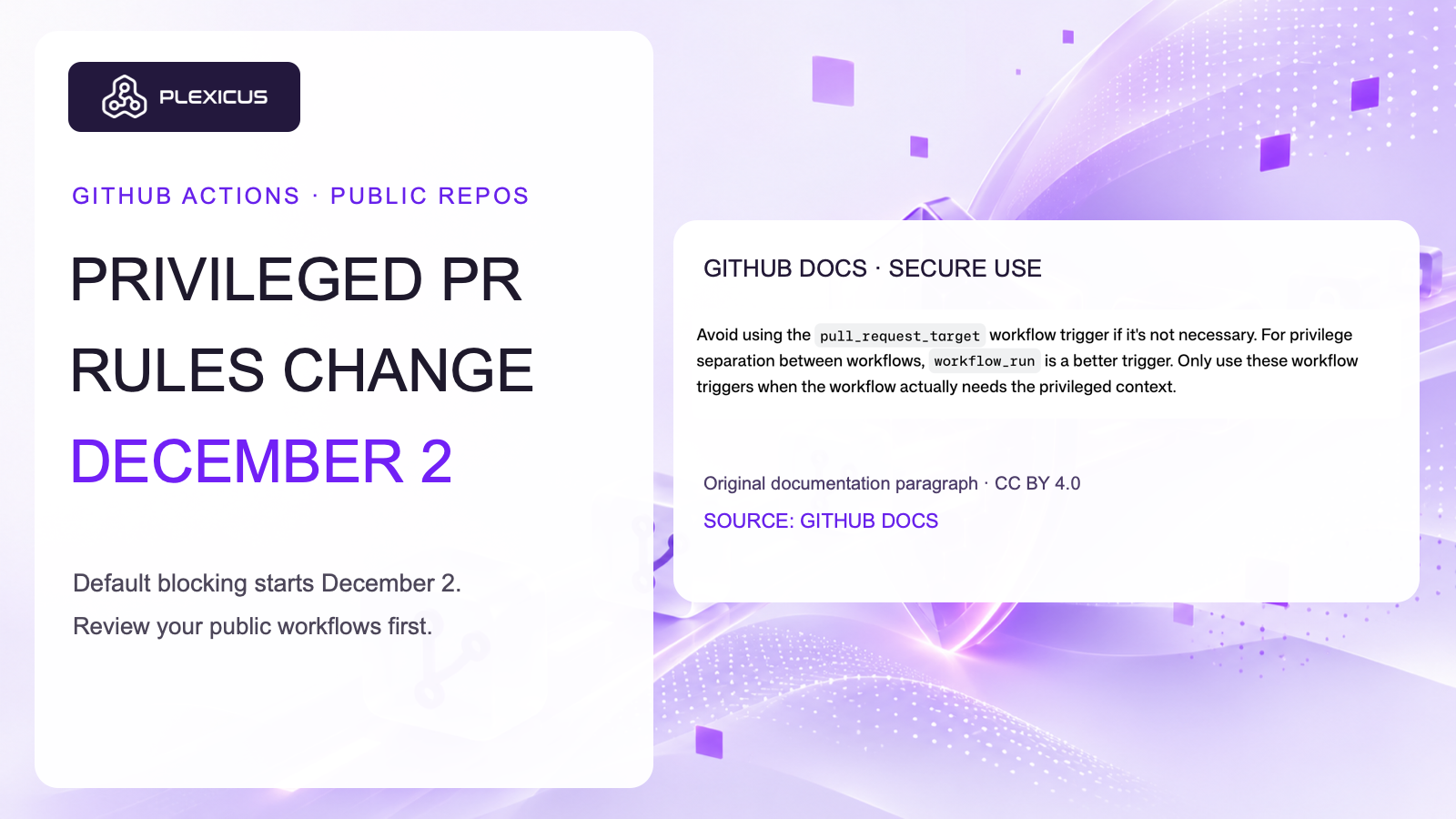
GitHub Will Block pull_request_target by Default in Public Repositories
A GitHub Actions policy change puts privileged pull request workflows under scrutiny. Here is what maintainers can do before enforcement.
17 articles
A GitHub Actions policy change puts privileged pull request workflows under scrutiny. Here is what maintainers can do before enforcement.
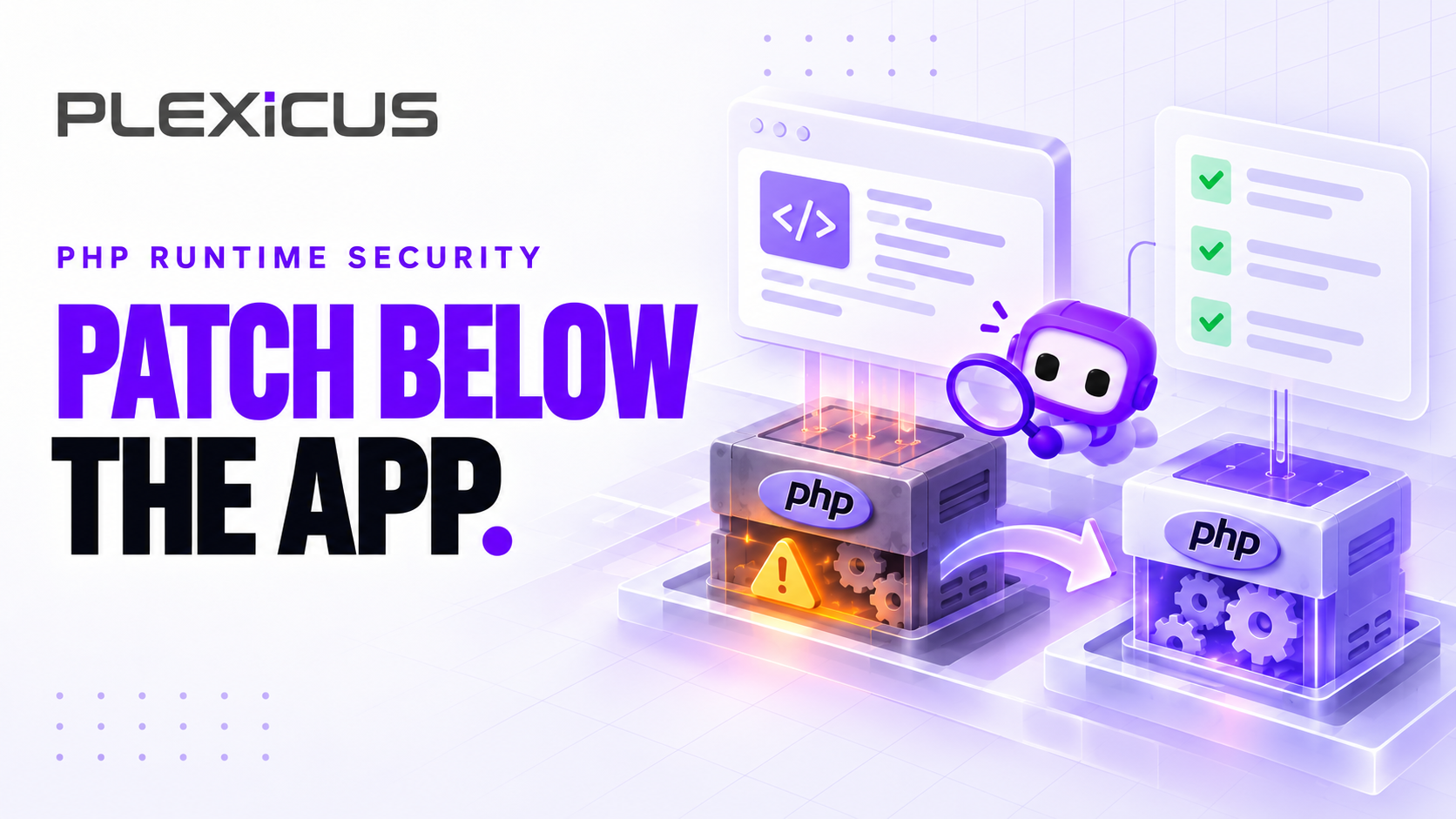
Separate PHP runtime exposure from application findings, verify worker replacement and keep remediation evidence reviewable with Plexicus.
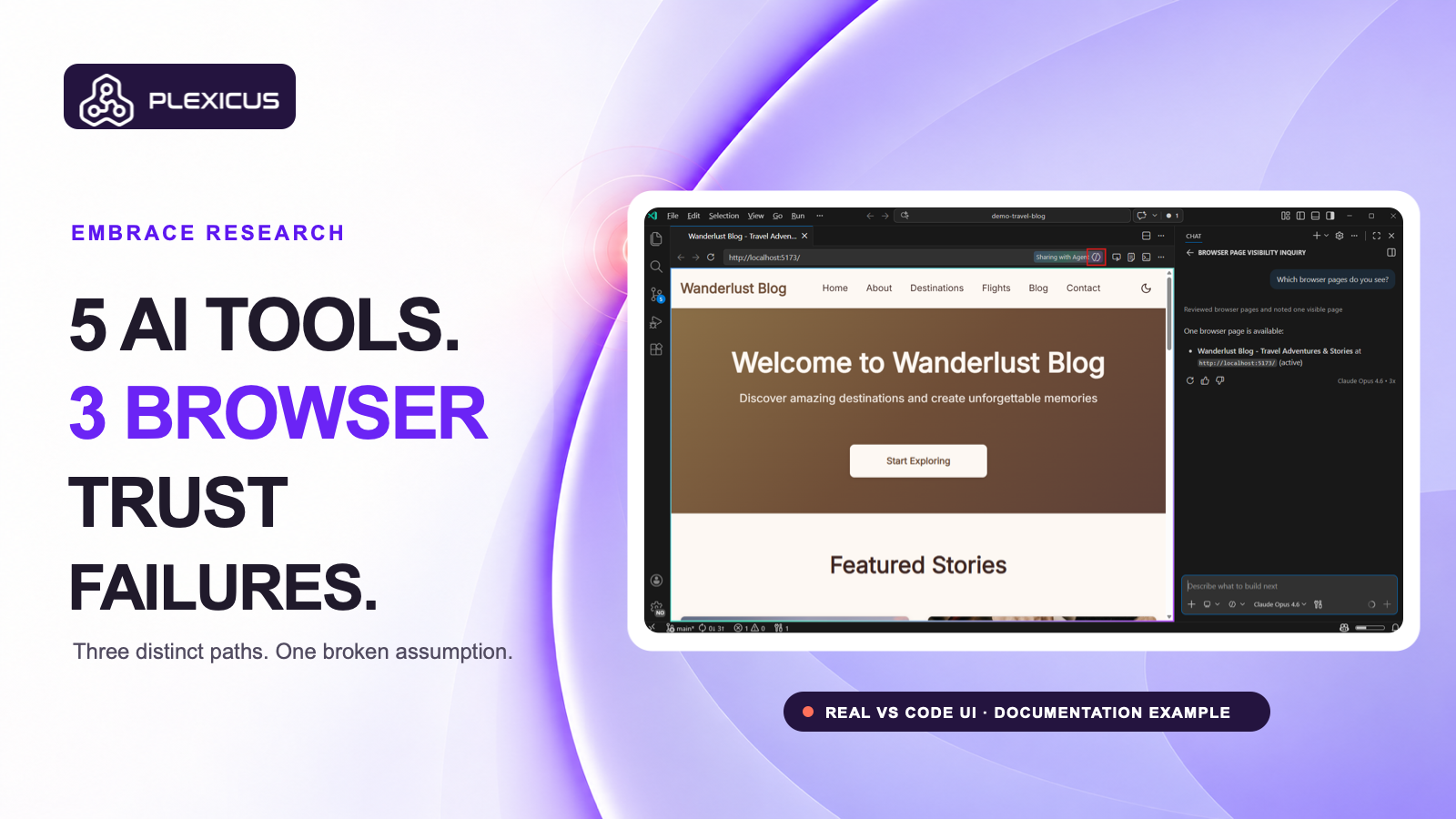
EMBRACE is a useful reminder that an embedded browser does not automatically keep the security boundaries of a standalone browser.
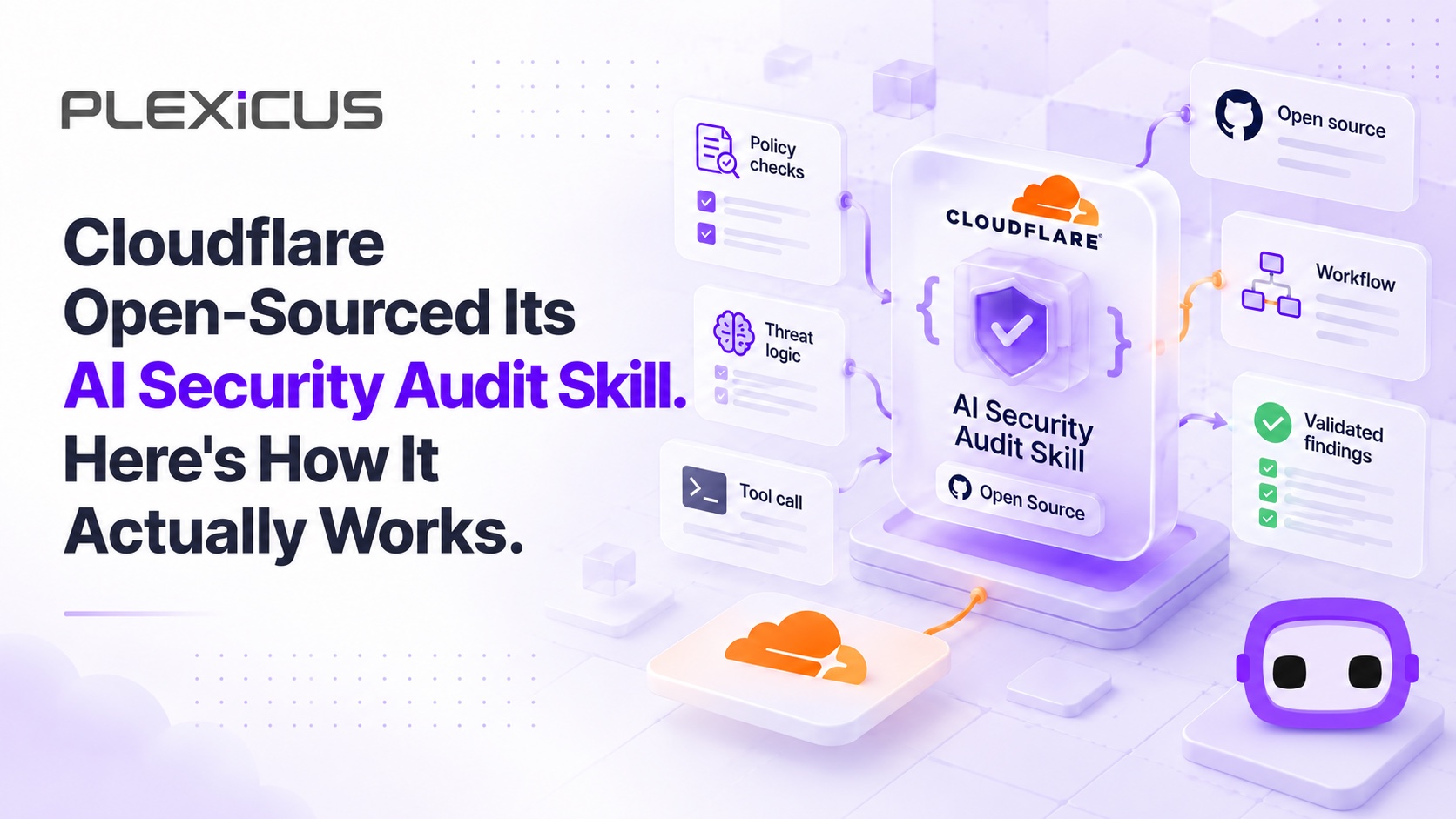
Cloudflare’s open-source coding-agent skill uses coverage-led hunting, independent validation, and structured evidence. Here is what the workflow can—and cannot—establish.
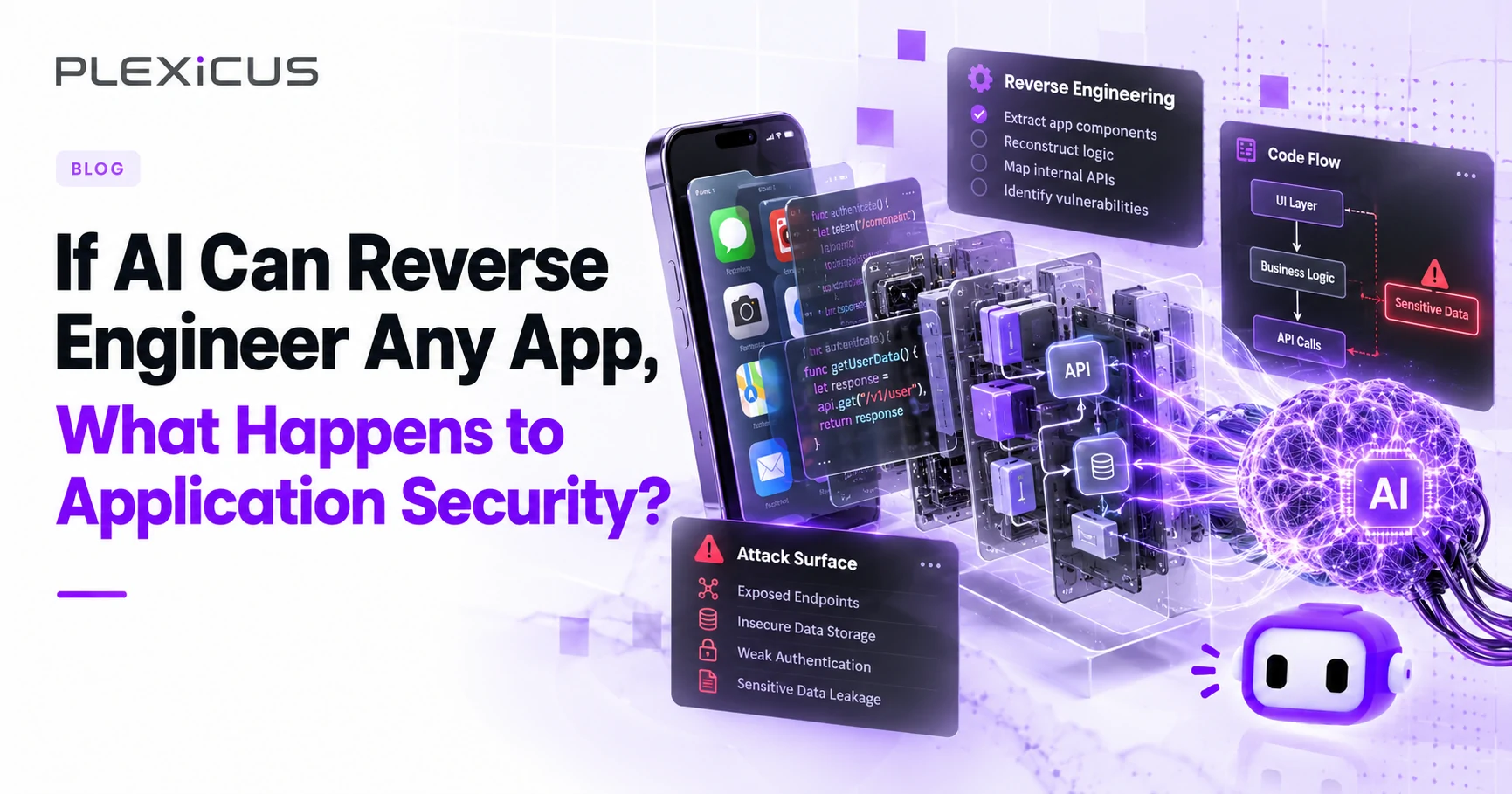
AI can help analysts navigate compiled software, but a decompiler output is not a vulnerability report. See how REA changes analysis, why reverse- engineering agents need protection, and how teams can validate findings.
Three systems asserted a condition and none of them checked whether it still held. A registry reported a package was attested. An evaluation harness reported a model was offline. An assistant reported a package would work.
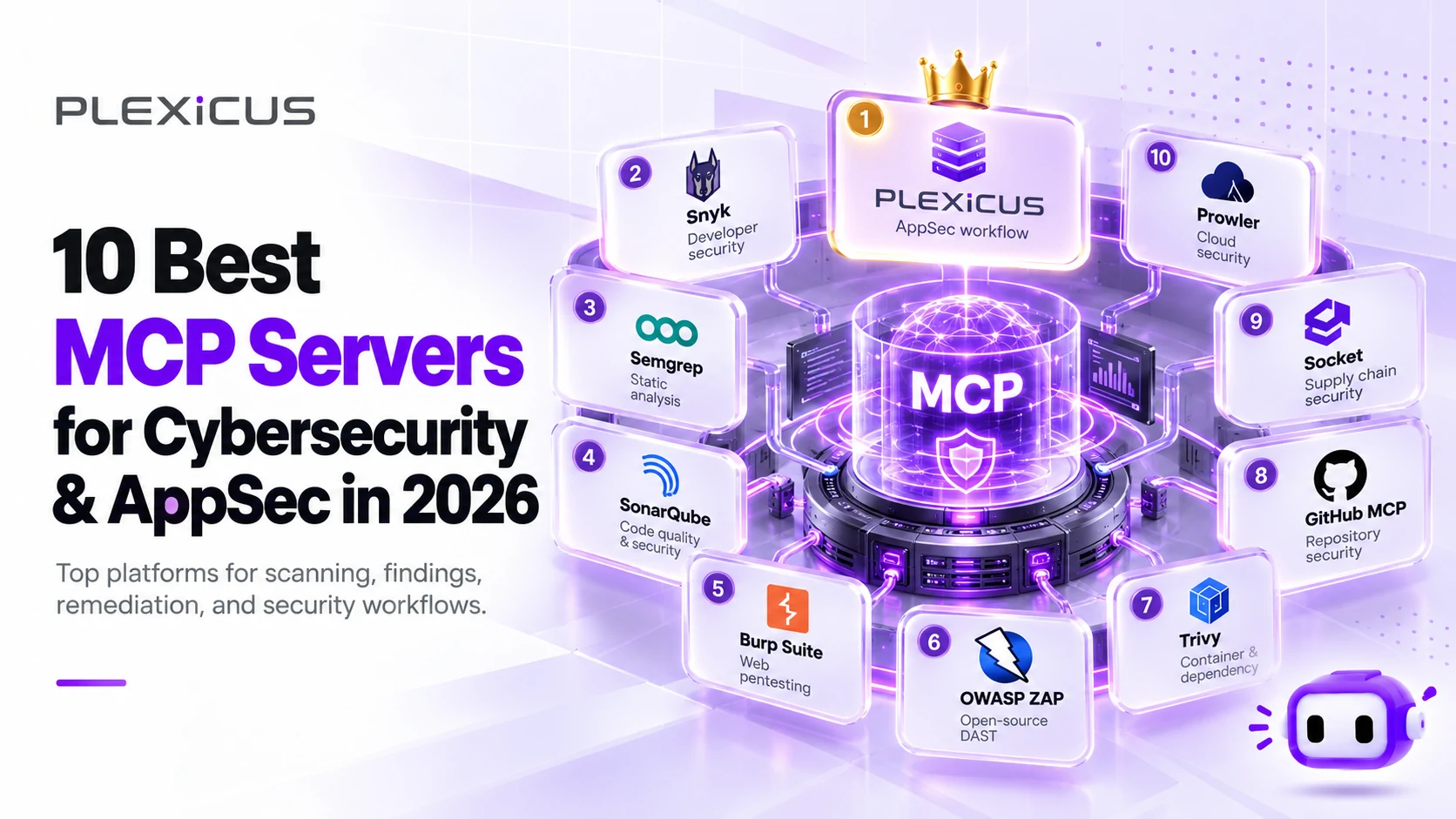
An editorial guide to security MCP integrations for AI-assisted development: repository findings, scanning, web testing, supply chain analysis, and cloud security.
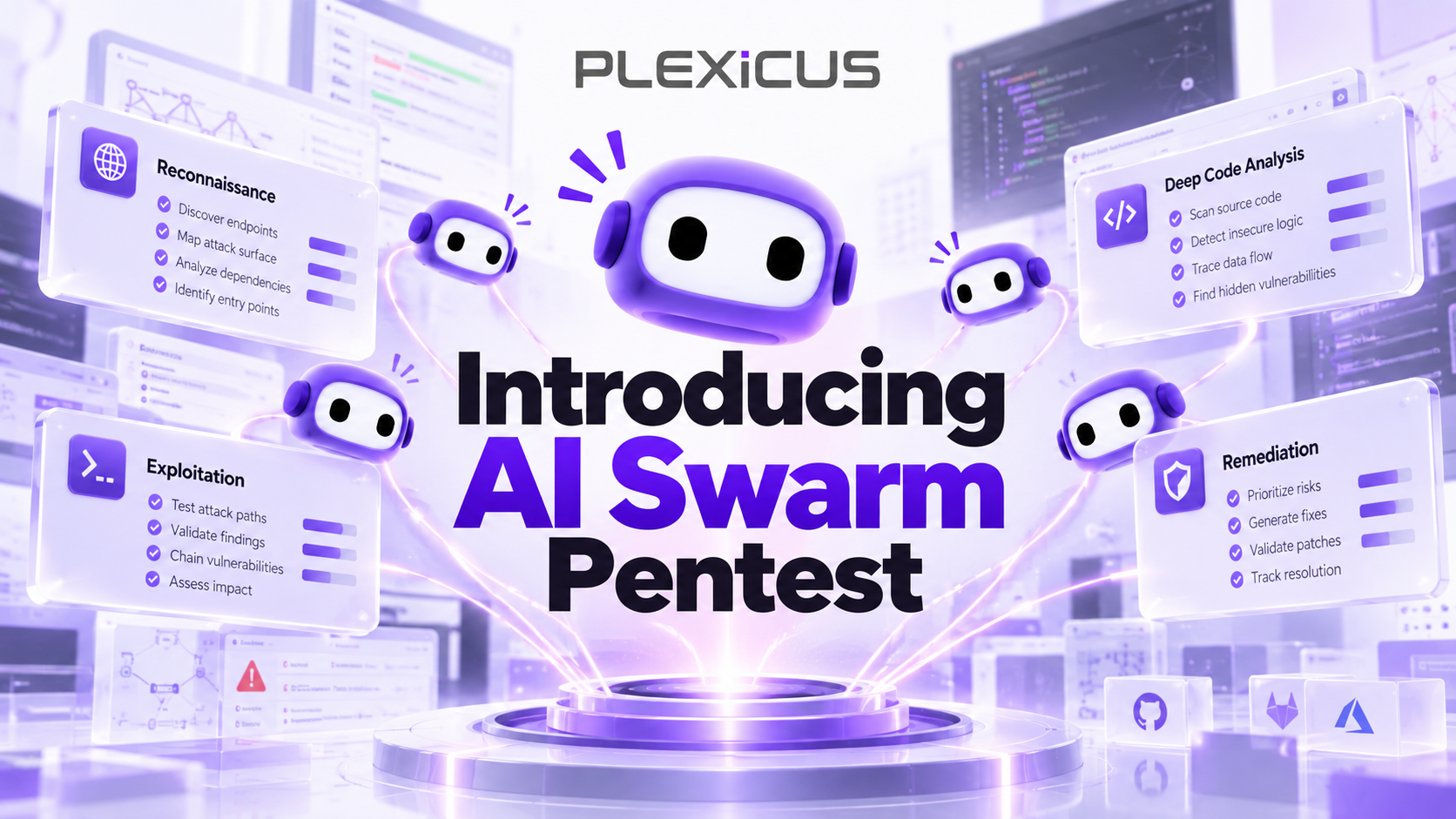
How specialized attack agents share context, challenge hypotheses, and independently verify attack paths inside the Plexicus Proof-Driven AppSec workflow.
A complete guide to application security in 2026, from secure design and software supply chains to testing, exploit validation, remediation, and Proof-Driven AppSec.
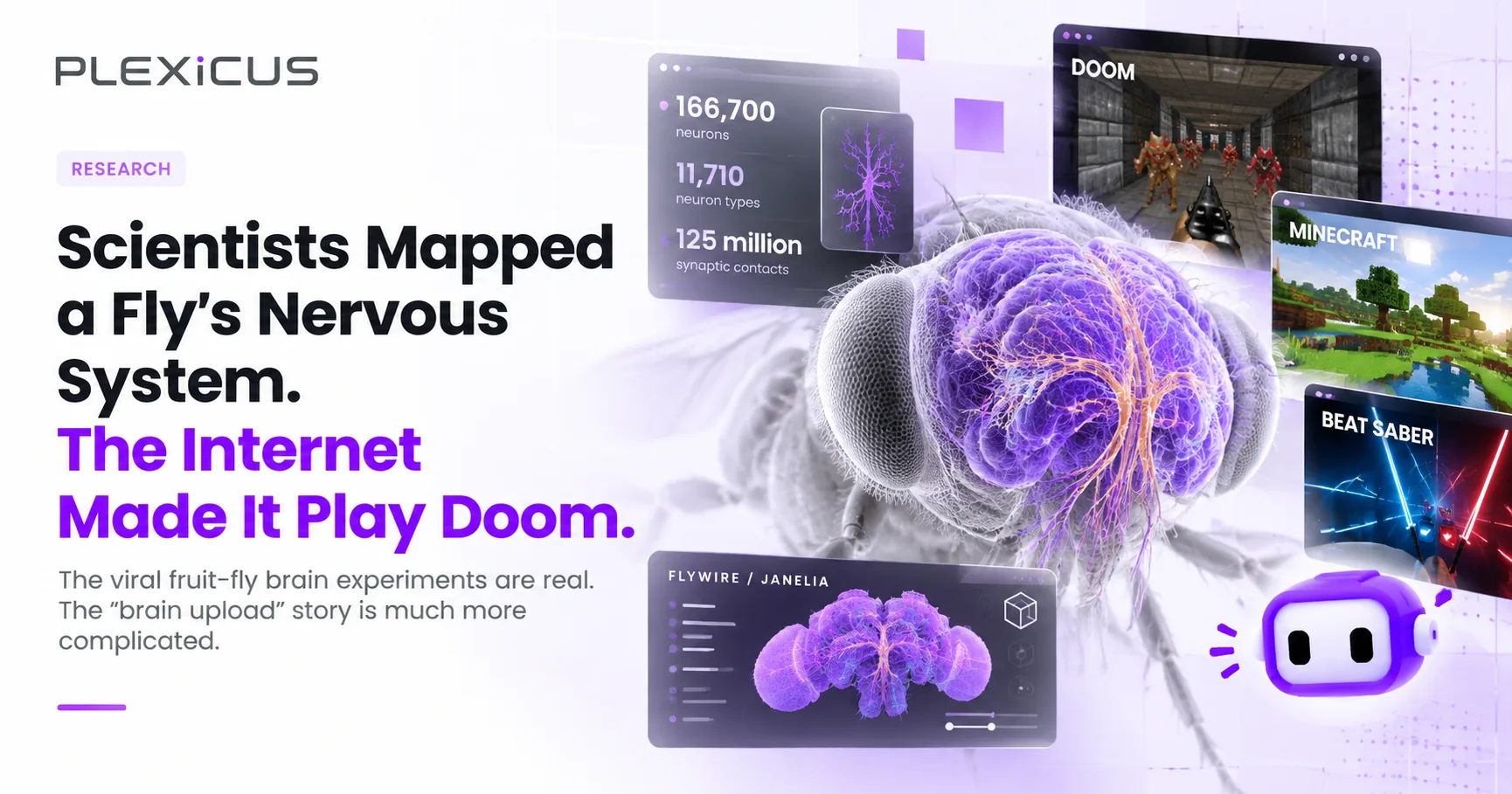
A fruit-fly connectome offers a vivid test of a security principle: a demo is not proof until controls show what the advertised system contributes.
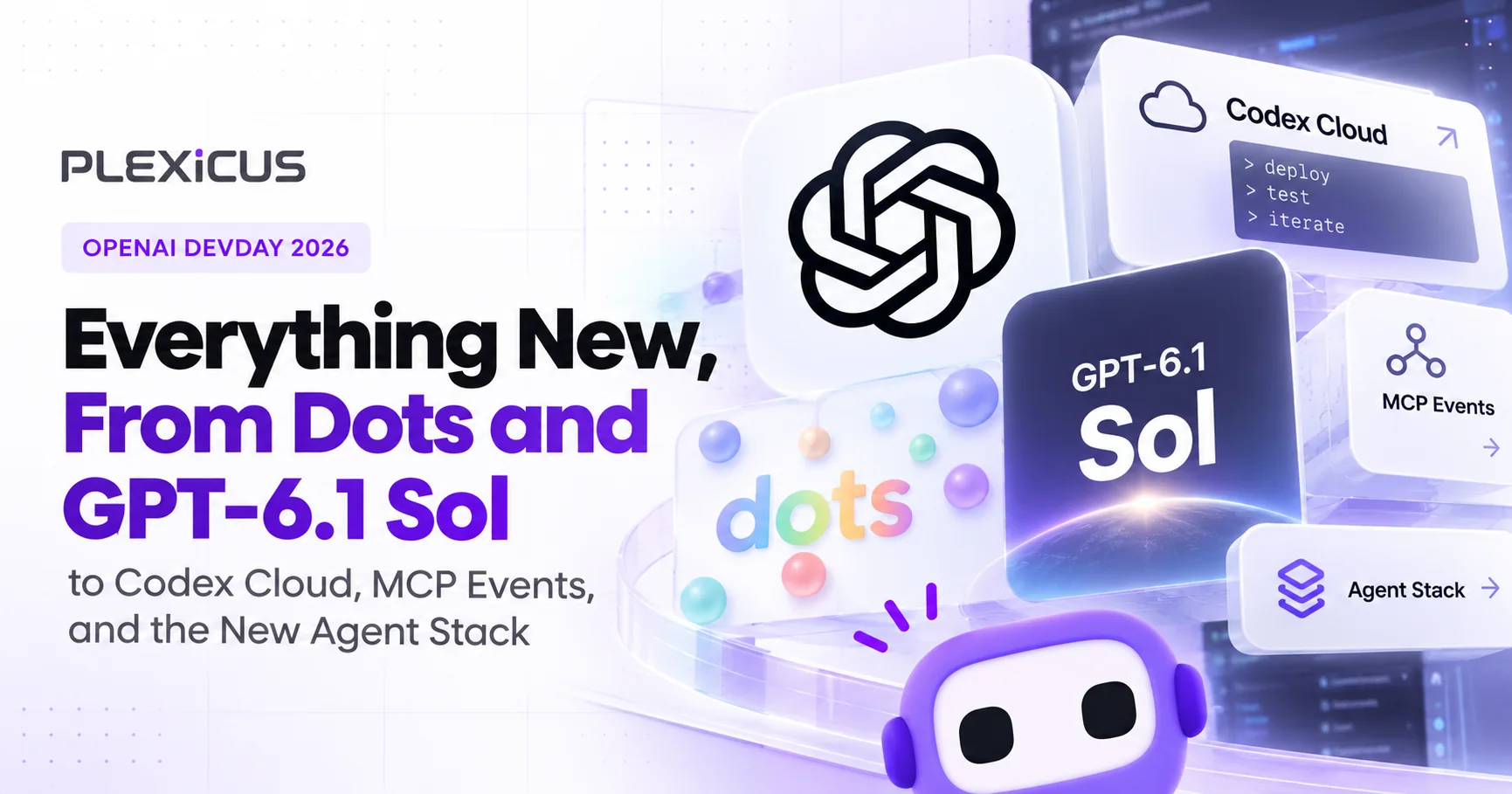
DevDay 2026 connected persistent agents, cloud coding, plugins, events, and shared work. Here is what shipped, what is still coming, and where AppSec boundaries lie.
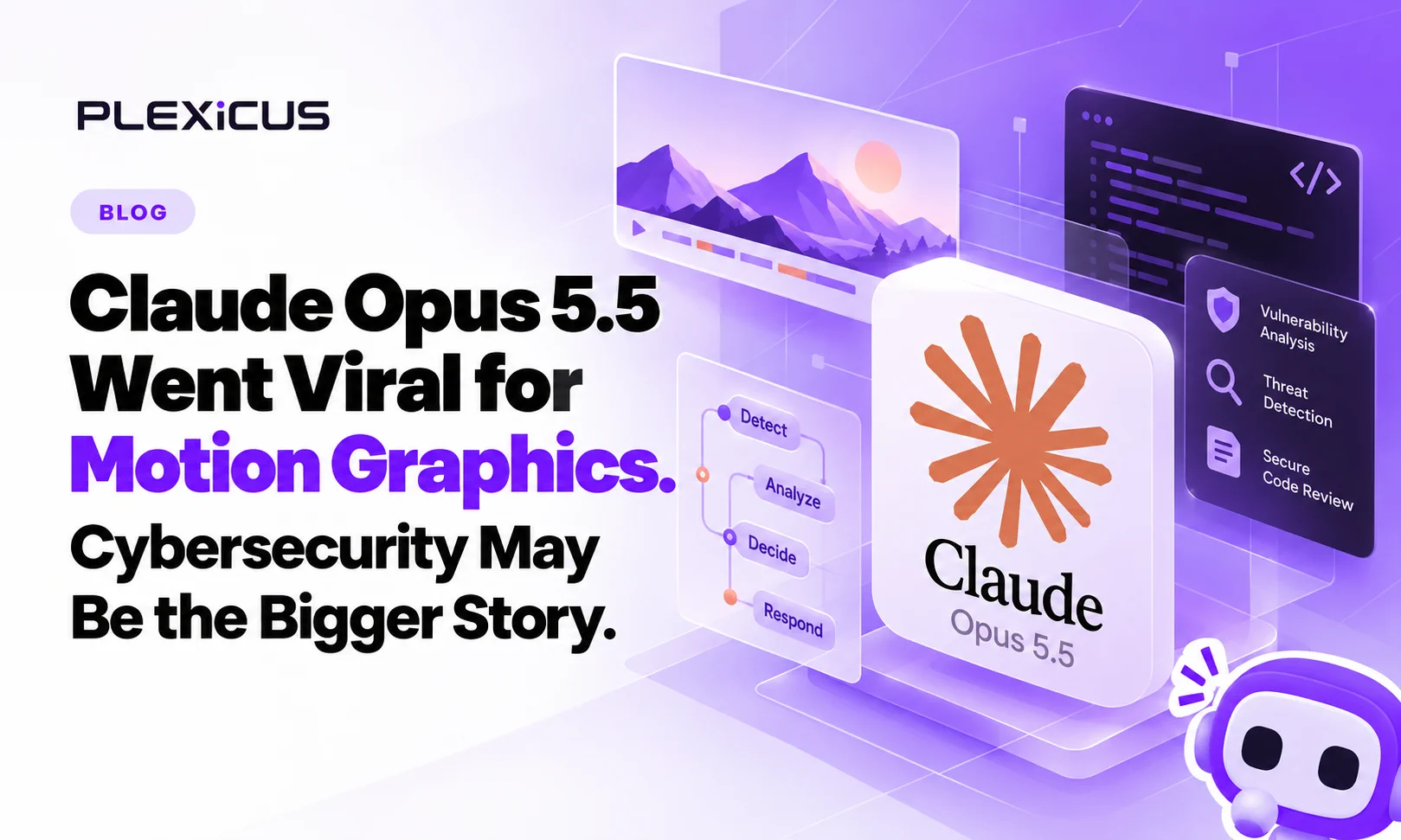
Opus 5.5 motion-graphics demos reveal an agentic loop: plan, write code, run it, inspect, revise. Claude cybersecurity now depends on verification keeping pace.
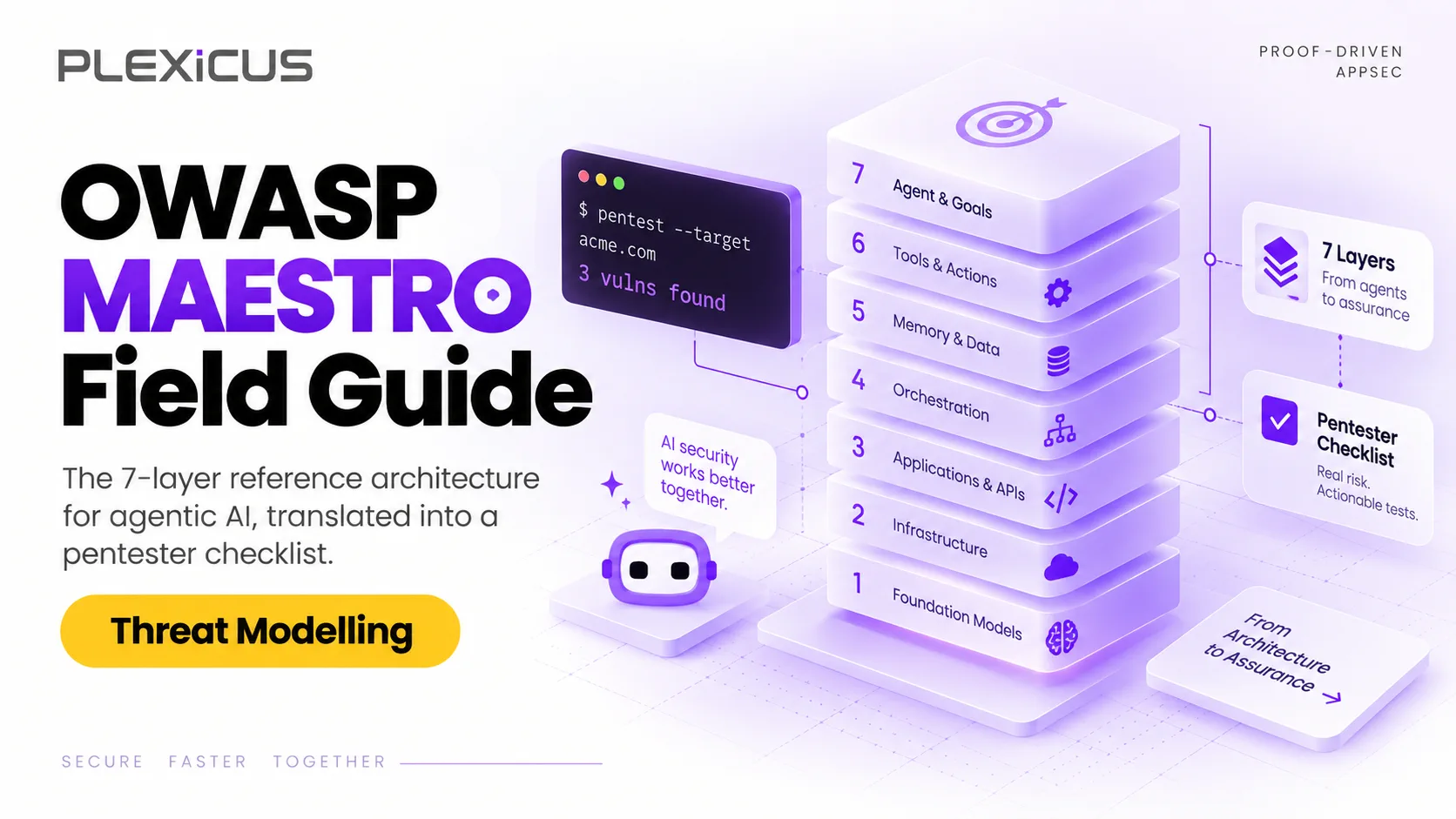
MAESTRO is the Cloud Security Alliance's 7-layer framework for agentic AI threat modeling, applied by the OWASP GenAI Security Project. This guide turns each layer into a pentest checklist.
AI can remove repetitive AppSec work without removing accountability. Learn how to decide what to automate, what to augment, and when a security decision should be escalated to a person.
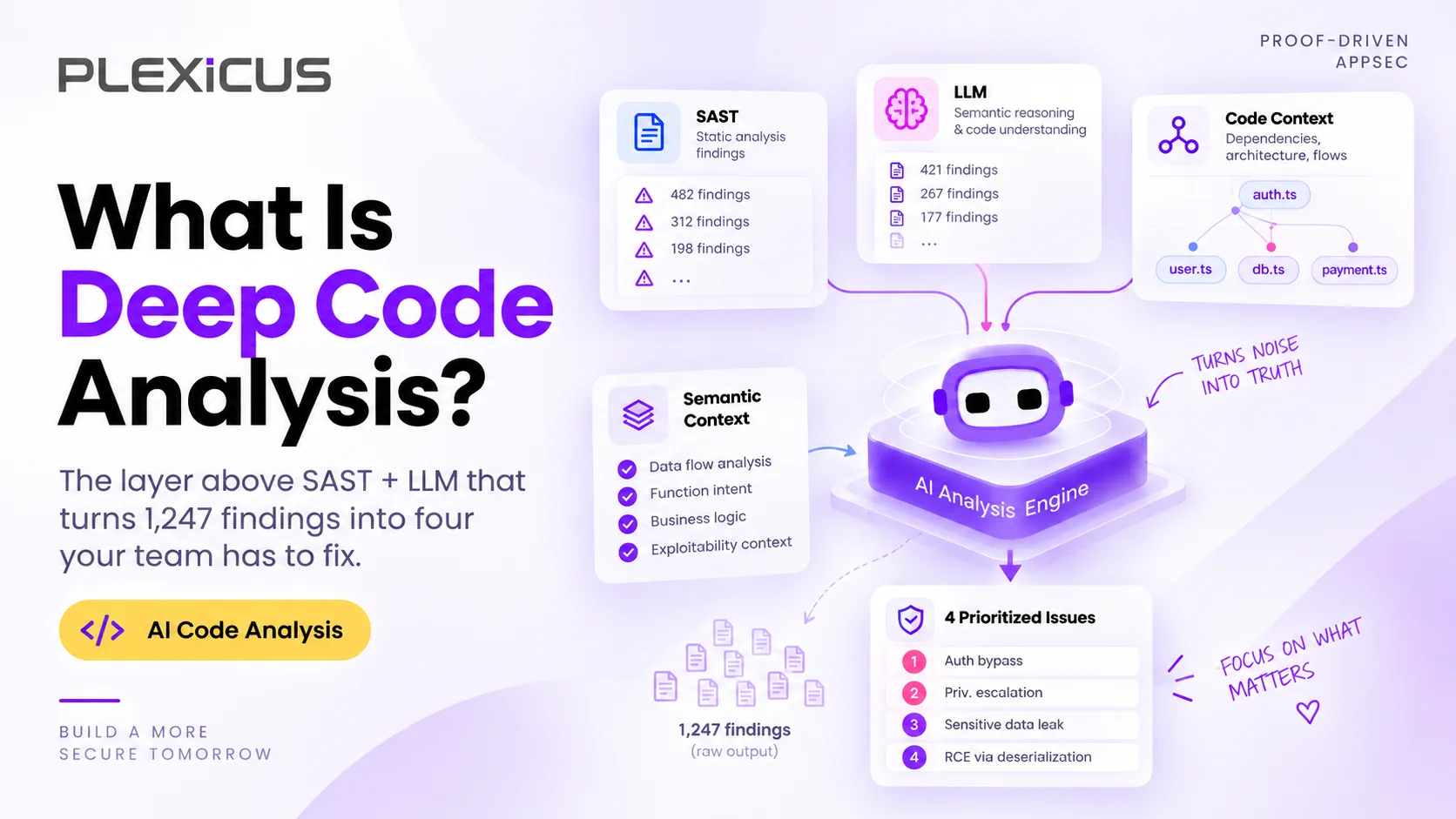
SAST false positives bury real bugs, and an LLM wrapper does not fix that. Deep Code Analysis uses reachability analysis to prove which findings are real, reachable, and worth fixing.
If you’re building or running software today, you’re probably juggling micro-services, serverless functions, containers, third-party packages, and an avalanche of compliance check-boxes. Each moving part spawns its own findings, dashboards, and angry red alerts. Before long, risk visibility feels like driving in San Francisco fog at 2 a.m.—you know danger’s out there, but you can’t quite see it.
A new collaboration between Plexicus and Céfiros is set to enhance application security across 19 countries in Latam and Iberia. This cybersecurity collaboration brings advanced Application Security Posture Management (ASPM) solutions to organizations seeking to proactively defend against cyber threats.
Plexicus is Proof-Driven AppSec: validated findings, contextual understanding, and reviewed remediation — anchored in evidence, scoped with you.